Andrew Stanton TED Talk: “Clues to a Great Story”
A 10-part series analyzing the Pixar writer-director’s TED Talk.

A 10-part series analyzing the Pixar writer-director’s TED Talk.
Andrew Stanton is one of the key members of Pixar’s ‘braintrust’ whose screenwriting credits include Toy Story, A Bug’s Life, Toy Story 2, Monsters, Inc., Finding Nemo, Wall-E and Finding Dory which he also directed [along with A Bug’s Life, Finding Nemo and Wall-E].
Back in March 2012, Stanton delivered a TED Talk: “The Clues to a Great Story.” Given his Pixar connection and the deep insights Stanton provided in his talk, I produced a transcription of the entire 19-minute presentation along with analysis of his comments.
Today: Part 2.
The most current lesson in story I’ve had was completing this most recent movie in 2012. It’s called John Carter, it’s based on a book called “The Princess of Mars” by Edgar Rice Burroughs. And Edgar Rice Burroughs actually put himself as a character inside the movie, and he’s the narrator. He’s summoned by his rich uncle John to his mansion with a telegram saying, “See me at once.” But once he gets there, he finds out his uncle has mysteriously passed away and been entombed in a mausoleum on the property.
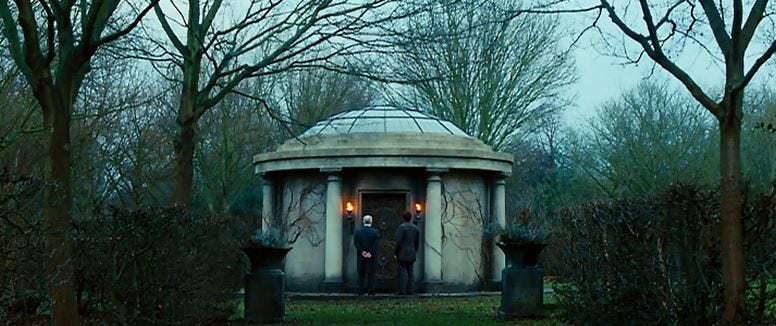
What this scene is doing is fundamentally making a promise. It’s making a promise that this story will lead somewhere that’s worth your time. And that’s what all good stories should do, they should give you a promise. You can do it in an infinite amount of ways. Sometimes it’s as simple as “once upon a time.”
These Carter books always had Edgar Rice Burroughs as a narrator in it, and I always thought it was such a fantastic device. It was like a guy inviting you around a campfire. Or somebody in a bar saying, “Let me tell you a story. It didn’t happen to me, it happened to somebody else, but it’s worth your time.”
A well-told promise is like a pebble being pulled back in a slingshot and propels you forward through the story to the end.
A few things:
- “It’s making a promise that this story will lead somewhere that’s worth your time”: There are two parts to this promise. The first is that do enough to convey the promise in the first place, excite the reader’s imagination and in so doing awaken their expectations. Then you have to deliver the goods!
- “A well-told promise is like a pebble being pulled back in a slingshot and propels you forward through the story to the end”: What a great image to accompany your writing. I call it Narrative Drive, the energy the story generates and sustains to keep the reader always wanting to turn the page, to move forward, to see what happens next.
For Part 1 of Stanton’s TED Talk, go here.
Tomorrow: Part 3.