A story’s “second music”
We may think of a screenplay universe as being comprised of two worlds.
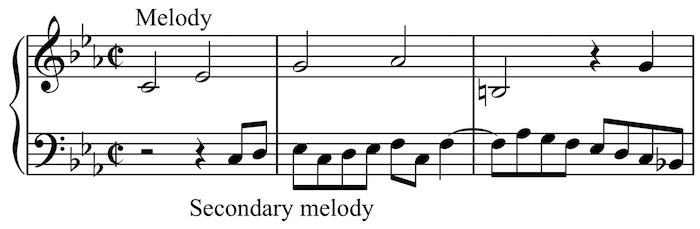
A Story’s “second music”
We may think of a screenplay universe as being comprised of two worlds.
The External World, the domain of Action and Dialogue.
The Internal World, the domain of Intention and Subtext.
We may think of the External World as the story’s Physical Journey.
We may think of the Internal World as the story’s Psychological Journey.
The Psychological Journey gives meaning to the Physical Journey, the respective contours of character arcs. Transformation. Change.
This means that in any given scene, while something is happening in the External World, something else happens in the Internal World.
I came across a poem which conveys this point wonderfully.
The Second Music
by Annie Lighthart
Now I understand that there are two melodies playing,
one below the other, one easier to hear, the other
lower, steady, perhaps more faithful for being less heard
yet always present.
When all other things seem lively and real,
this one fades. Yet the notes of it
touch as gently as fingertips, as the sound
of the names laid over each child at birth.
I want to stay in that music without striving or cover.
If the truth of our lives is what it is playing,
the telling is so soft
that this mortal time, this irrevocable change,
becomes beautiful. I stop and stop again
to hear the second music.
I hear the children in the yard, a train, then birds.
All this is in it and will be gone. I set my ear to it as I would to a heart.
In a screenplay, there are two melodies:
The Plotline (External World).
The Themeline (Internal World).
The former we see as Action and hear as Dialogue.
The latter we intuit as Intention and interpret as Subtext.
That first melody is visceral, playing to our eyes and ears.
The second melody is more… evocative… feeling… emotionally tactile.
When we write a screenplay, we give much thought and consideration to the Plotline, as we should. The events from scene to scene. Pace. Transitions. Major plot points.
That’s the first music.
We must also — and in equal fashion — pay close attention to the Themeline. The emotional life of the characters. The psychological ups and downs, ins and outs. The emergence of themes and motifs.
That’s the second music.
Whether it’s Dorothy Gale learning to feel like her home in Kansas is a home in The Wizard of Oz… or Clarice Starling vanquishing her nightmares by saving a victim from a serial killer in The Silence of the Lambs… or Phil discovering what it means to move from selfish to selfless in Groundhog Day, all stories, all movies have two narrative melodies.
As writers, we need to hear — and write — them both.
“Now I understand that there are two melodies playing, one below the other, one easier to hear, the other… lower, steady, perhaps more faithful for being less heard yet always present… I stop and stop again to hear the second music… I set my ear to it as I would to a heart.”
For more poetry by Annie Lighthart, go here.