A Story Idea Each Day for a Month — Day 26
This is the 12th year in a row I’ve run this series in April. Why a story idea each day for the month? Because the best way to come up with a great story idea is to come up with a lot of ideas. And the best way to come up with a lot of ideas is to be proactive in sourcing story ideas.
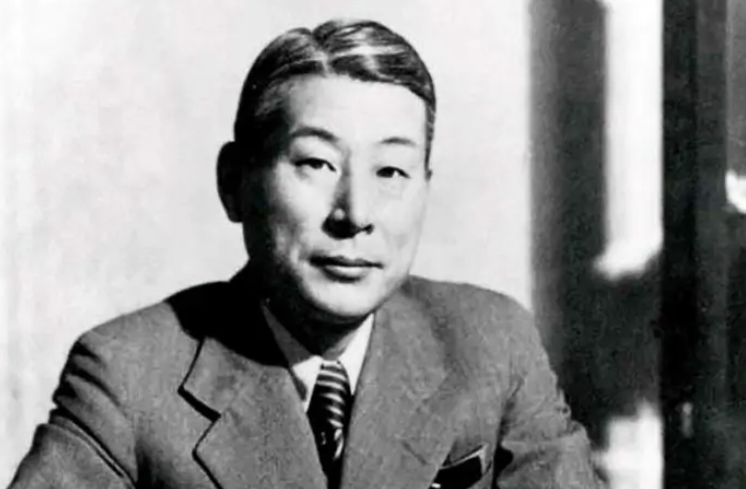
Today’s story: ‘A Japanese Schindler’: The remarkable diplomat who saved thousands of Jews during WWII.
Nathan Lewin’s mother kept up with the news. Unlike other Jews in Poland, she had been born in the Netherlands, and even attended the University of Berlin, before marrying a Polish Jew — Lewin’s dad — and immigrating. Because of this experience, she was perhaps more aware than others around her of the threat of Adolf Hitler.
“She made my father promise that when and if Hitler crossed the border into Poland, we would immediately try to escape and leave Poland,” Lewin, now 84, said Monday at a virtual reception via Zoom.
When Hitler invaded in September 1939, they did just that. Lewin, then 3 years old, was “carried in the night through the forest” to Lithuania with his parents, maternal grandmother and an uncle.
But Lewin’s mother knew they still weren’t safe. A Dutch diplomat told the family they would be allowed into Curaçao without visas, but they still needed a transit visa from another country to get there.
That was when they found out about Chiune “Sempo” Sugihara. He was a Japanese diplomat who spoke fluent Russian; he had been sent to the Lithuanian city of Kaunas to monitor German and Soviet troop movements under the guise of handling consular affairs. Now, as the Soviets occupied Lithuania, all diplomats would soon be leaving.
When Lewin’s family went to the Japanese Consulate in late July 1940, “Mr. Sugihara did not hesitate,” Lewin said. In fact, Sugihara did ask his superiors in Japan what he should do. When they told him not to give travel documents to the Jews, he decided to help them anyway. With a Japanese transit visa, the Soviets would allow the refugees to take a train across Siberia en route to Japan.
The Lewins were among the first of many to get these precious documents. Over the next month, Sugihara wrote 2,000 more visas for any Jews who showed up at his office. He reportedly spent 20 hours a day that month writing as many visas as he could and was still writing them on the train platform when he was evacuated.
“He didn’t care if they were citizens of the Netherlands or Poland or Germany or Lithuania. He knew they were human beings who had to be rescued and whose lives were at stake,” Lewin said. All three of Lewin’s other grandparents were killed in the Holocaust.
Of course, Schindler’s List (1993) is an amazing movie, but this offers a unique spin on an inspirational — and largely unknown — story.
The challenge: How to turn this into a movie? It’s about a bureaucrat sitting in an office writing visa after visa. The interactions with Jewish families offer opportunities for drama, but the office environment could reduce those moments to a series of “talking head” scenes. So one thought would be to create situations which send “Sempo” out into the streets of Kaunas, Lithuania. Perhaps he has to do some field research about a family’s visa application. Maybe he becomes so well known in the Jewish community, they follow him wherever he goes: people show up at his apartment, at restaurants where he eats, at a Catholic church where he offers his daily Buddhist prayers.
The other concern is how to generate conflict. In Schindler’s List, the story features one of the great arch-villains in cinema history — Amon Goeth. According to history, the Japanese government ordered Sempo not to provide visas for Jewish applicants, but he did anyway. Could there be someone who outranks Sempo, another Jewish bureaucrat. Does Sempo have to do his charitable work undercover?
What about character arc? As detailed in the article, Sempo immediately grants visas. What if he begins cowed by the orders not to provide visas, but over time evolves from an I-It relationship with Jewish supplicants to an I-You connection, learning to see a humanity we all share?
A final thought: What if Sempo had a wife stationed with him? That could create potential conflict and drama.
There’s my 26th story idea of the month. What would you do with it?
Day 1
Day 2
Day 3
Day 4
Day 5
Day 6
Day 7
Day 8
Day 9
Day 10
Day 11
Day 12
Day 13
Day 14
Day 15
Day 16
Day 17
Day 18
Day 19
Day 20
Day 21
Day 22
Day 23
Day 24
Day 25
Each day in April, I invite you to join me in comments to do some brainstorming. Take each day’s story idea and see what it can become when we play around with it. These are valuable skills for a writer to develop.