A Story Idea Each Day for a Month — Day 25
This is the 14th year in a row I’ve run this series in April. Why a story idea each day for the month? Because the best way to come up with…
This is the 14th year in a row I’ve run this series in April. Why a story idea each day for the month? Because the best way to come up with a great story idea is to come up with a lot of ideas. And the best way to come up with a lot of ideas is to be proactive in sourcing story ideas.
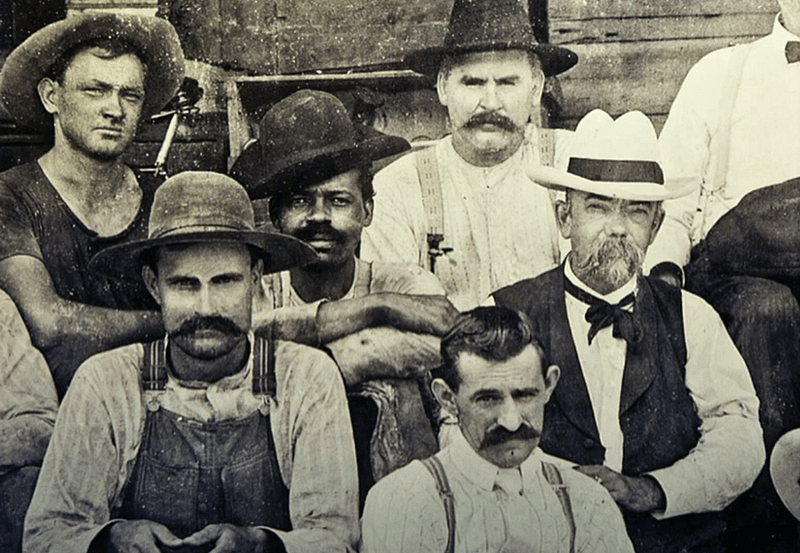
Today’s story: The enslaved man who created Jack Daniel’s: Hidden Black legacy in America’s spirit industry.
Only in the past decade have Black Americans, for the first time, even become distillery owners. These folks include Fawn Weaver, who runs the first Black woman-owned distillery. She named it after Nearest Green, an enslaved man who, in 2016, was finally acknowledged by the company that owns Jack Daniels as the one who actually taught Jack Daniel how to make whiskey.
Many people believe our distilled industry was “a lily-white affair,” created entirely by German and Scotch-Irish settlers, but that’s far from the truth. Whiskey-making in this nation has deep roots in the Southern slave trade. Black Americans not only made up the majority of the workforce, but were integral to the creation of the industry. In fact, distiller-trained enslaved people were considered to have the most desirable skillsets, which earned auction representatives their highest premiums. African enslaved people had their own traditions of alcohol production, going back to the corn beer and fruit spirits of West Africa. Still others obtained their expertise on Caribbean sugarcane plantations. They continued to make alcohol illicitly, even while in American bondage.
Contributions from enslaved people, of course, often went unacknowledged. America has a long, sad history of ignoring Black innovations, and their contributions to the distilled industry are no different. Historical records on this industry were already pretty sparse, but the few records that exist from the 18th and 19th centuries did not normally credit non-white male contributions. Most of the records only recorded the manual labor of distilling, such as rolling barrels or gathering grains.
— —
However, the biggest bombshell — dropped just a few years ago — that upended the entire distilling industry came from the Louisville-based Brown-Forman corporation, which owns Jack Daniel’s. In 2016, the company finally admitted to The New York Times that an enslaved person by the name of Nathan “Nearest” Green was the one who trained the legendary Jack Daniel to make his well-known whiskey. Green was enslaved by a man named Dan Call, who described Green as “the best whiskey maker that I know of.”
The story of Green was officially ignored by the distillery, even though biographies going back several decades recounted the story of Dan Call telling Green to teach Daniel everything he knew about whiskey. Not only did Green teach Jack Daniel how to run a whiskey still, Daniel hired two of Green’s sons when he opened his first distillery. Regrettably, there are many other Black Americans like Green throughout the South whose names have been lost to history.
One thing that initially set Jack Daniel’s product apart from other whiskeys was its patented process of using sugar maple charcoal for filtration. The technique, pioneered by Green, was revolutionary in how it removed organic compounds while not affecting the taste of the alcohol. Today, nearly every distillery creating Tennessee whiskey uses maple charcoal filtering, though the actual process varies by company.
That’s where Fawn Weaver comes in. Inspired by The New York Times’ 2016 piece, the real estate investor and author completed extensive archival research on Green, including archiving 10,000 documents and artifacts. Because of her research and advocacy, Jack Daniel’s parent company named Green as its first master distiller in 2017 — ahead of Jack Daniel himself.
This would be a cool biopic.
Like so many contributions of Black men and women which have been erased from the history of the country, their stories deserve to be told … and brought into the light.
Let’s see someone tell the story of Nearest Green.
There you go, my 25th story idea of the month. And it’s yours. Free! What would YOU do with it?
Day 1
Day 2
Day 3
Day 4
Day 5
Day 6
Day 7
Day 8
Day 9
Day 10
Day 11
Day 12
Day 13
Day 14
Day 15
Day 16
Day 17
Day 18
Day 19
Day 20
Day 21
Day 22
Day 23
Day 24
Each day in April, I invite you to join me in comments to do some brainstorming. Take each day’s story idea and see what it can become when we play around with it. These are valuable skills for a writer to develop.
See you in RESPONSES to hear YOUR take on this story idea. And come back tomorrow for another Story Idea Each Day For A Month.