A Story Idea Each Day for a Month — Day 22
This is the 11th year in a row I’ve run this series in April. Why a story idea each day for the month? Because the best way to come up…
This is the 11th year in a row I’ve run this series in April. Why a story idea each day for the month? Because the best way to come up with a great story idea is to come up with a lot of ideas. And the best way to come up with a lot of ideas is to be proactive in sourcing story ideas.
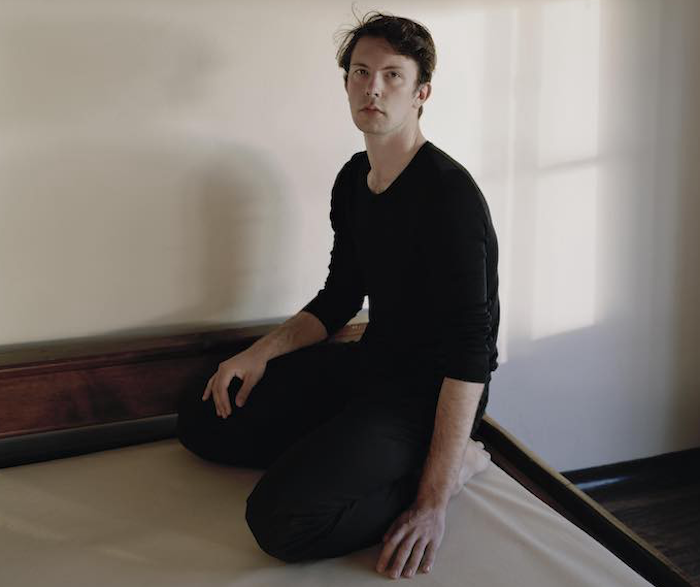
Today’s story: Conceived by a sperm donor, a photographer travels across the United States to document the 32 siblings he had never met.
Eli Baden-Lasar had always known he was conceived using a sperm donor. However, discovering that one of his friends was a half-sibling was a decisive moment. He had always been interested in visual culture and in using a camera to explore ideas, and so he set out on what turned out to be a year-long journey to meet and photograph each of his half-siblings. The resulting project was originally published as the cover story of The New York Times Magazine in June, A Family Portrait: Brothers, Sisters, Strangers, Strangers (though the photographer refers to the work simply as his siblings project).
Far from being a straightforward documentary piece about family discovery, the project is a multilayered exposition of an emotional, familial and political enquiry, taking in not only Baden-Lasar and his siblings’ experiences, but also serving as its own internally-functioning piece in which each photograph rewards close and careful looking, presenting a narrative which is ambiguous rather than conclusive. “I had moments which felt as though genetics or biology or this connection felt really potent; and moments when it felt like this entire experience, the effort, even the feeling that there is a connection, was pointless, and contrived, and like I was an imposition,” says the photographer. “And I think that all of the extreme reactions, or experiences, were inscribed in what I was trying to do.”
From the original New York Times magazine article:
It was never a secret in my house that I was conceived with the help of an anonymous sperm donor. For a majority of my childhood, I never really thought about him. But when I was around 11, I went through a period of having questions. My parents — I have two mothers — gave me a photo copy of a questionnaire that was sent to them from the sperm bank they used, California Cryobank. The donor filled it out in 1996, two years before I was born.
I remember carrying the form with me in my backpack, taking it to school and studying it occasionally when I remembered I had it. There was this sense of touch — this person had used his hand to answer these questions; I could see where he had crossed things out. It wasn’t that I was so desperate to imagine who he was; it was enough to have proof that he was real, entangled with who I am and yet, as that document showed, totally separate. The form made him concrete, if inscrutable. It also gave me the sense that there was this larger world, this process and this bureaucracy that my existence was built upon. It was a way to help me understand myself.
I knew a lot of other children whose parents had used donors to conceive because every summer we went to a camp for same-sex families. Last summer, news traveled through the community that two kids from two families who attended the camp for years had independently gone on to a registry for family members trying to connect with donors or donor siblings. The two discovered that they shared a donor — that they were half siblings.
Until that moment, it had not really occurred to me — or my mothers, even though one is an ObGyn — that I might have half siblings out there. It makes no sense that we didn’t think about that, because my parents deliberately chose a donor whose sperm had successfully produced at least one live birth, whose sperm had, in a sense, “worked.” I think they were just so focused on thinking about the new family they were creating that they never stopped to think about the implications of the huge, inadvertent social experiment they were joining.
The news about the two kids at camp made me curious to find out if I had half siblings that I did not know about. So that same month, last August, when I was 19, I dug up the questionnaire, went to the sibling registry for California Cryobank, the largest sperm bank in the nation, and typed in the donor’s number. I landed on a message board for children of my particular donor and saw about a dozen cryptic user names of various mothers or children who were perhaps hesitant to reveal themselves completely. One jumped out at me — it said jplamb.
I grew up in Oakland, but I spent a semester in high school at a program in New York for kids interested in experiential learning, and one friend I made there, I knew, had two mothers who used a sperm donor to conceive him. His name was Gus Lamb. Right away, I texted him to ask if he had registered on the California Cryobank. He said he had. We exchanged donor numbers, and then we knew: We were half siblings.
Thus, began Eli’s journey to multiple states to meet his multiple half-siblings, each procreated in part by anonymous sperm donor. Clearly, an interesting story conceit. What to do with it?
I like the idea of a Protagonist going on a journey to connect with various half-siblings, but the real point of the quest is for this character to discover who they are. So since every story in this year’s series features a female Protagonist, let’s begin with Sadie. I’ll say she’s 25 years old. College graduate, but struggled to get through dropping in and out, then back into school. She majored in creative writing, but hasn’t written anything in the 18 months since she graduated. A barista at a small independent coffee shop in San Luis Obispo, California. Her parents, Chad and Miguel, are divorced, the split prompted when Chad began a heterosexual relationship with Felicia.
Drifting through life, not knowing who she is and what she wants, on a whim Sadie takes a 23andMe test. Discovers she has some half-siblings. Reaches out to the sperm bank. Not just some half-siblings. A lot of half-siblings, seven to be exact. After a falling out with her on-again, off-again boyfriend, she spontaneously decides to go find her half-siblings. She can’t really tell why, it just feels important to her.
So this is part-road picture, part-family drama. And in this story, I think she eventually meets up with her father.
One thing to bear in mind: Sperm banks tend to attract really smart donors. In fact, patrons pay a special fee for sperm donated by men who are certified as genius (160+ IQ test score). Therefore, the half-siblings she meets, then ultimately her father are all intelligent. For some, that is a blessing. One is a successful mechanical engineer. Another is a speechwriter for a U.S. Senator. For others, they’ve never really managed to live up to their potential including one who is just out of a substance abuse clinic for the 3rd time.
I have no idea where the story goes. I know I’d like for Sadie to discover some key to her self-identity, but I’m not sure. However, it feels like there is a solid indie drama here.
There you go, my 21st story idea of the month. What would YOU do with it?
Day 1
Day 2
Day 3
Day 4
Day 5
Day 6
Day 7
Day 8
Day 9
Day 10
Day 11
Day 12
Day 13
Day 14
Day 15
Day 16
Day 17
Day 18
Day 19
Day 20
Day 21
Each day in April, I invite you to join me in comments to do some brainstorming. Take each day’s story idea and see what it can become when we play around with it. These are valuable skills for a writer to develop.
See you in RESPONSES to hear YOUR take on this story idea. And come back tomorrow for another Story Idea Each Day For A Month.