A Story Idea Each Day for a Month — Day 22
This is the 13th year in a row I’ve run this series in April. Why a story idea each day for the month? Because the best way to come up…
This is the 13th year in a row I’ve run this series in April. Why a story idea each day for the month? Because the best way to come up with a great story idea is to come up with a lot of ideas. And the best way to come up with a lot of ideas is to be proactive in sourcing story ideas.
Today’s story: Accidental EEG sheds light on how the human brain dies.
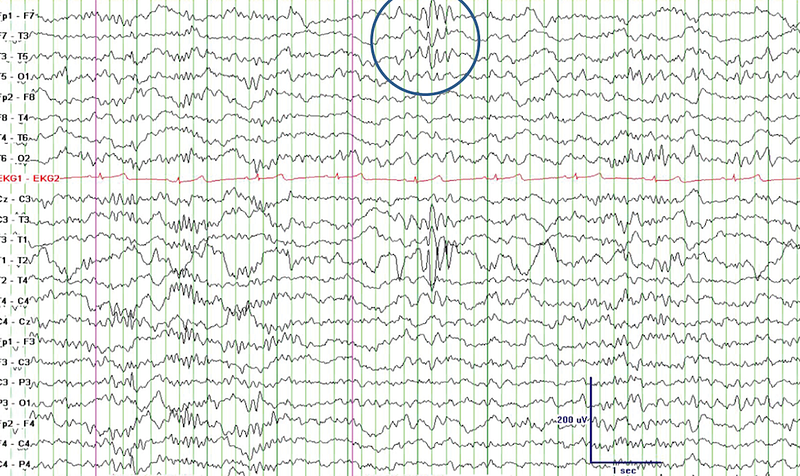
For the very first time, the brain activity of a dying person has been captured and recorded when an 87-year-old man suffered fatal cardiac arrest while undergoing an electroencephalogram (EEG) procedure as a part of his treatment for epilepsy following a traumatic brain injury. The recording revealed a brain wave pattern like those seen when memories are activated.
Although the study, published online February 22 in the Frontiers in Aging Neuroscience reports data from a single subject, experts say that the recording confirms the likelihood that, as we die, our lives actually may flash before our eyes.
“The same neurophysiological activity patterns that occur in our brains when we dream, remember, meditate, concentrate — these same patterns also appear just before we die,” study investigator Ajmal Zemmar, MD, PhD, assistant professor of neurosurgery at the University of Louisville, Louisville, Kentucky, told Medscape Medical News.
The minute long EEG recording, captured at the exact point when blood flow to the brain stopped, revealed a noticeable increase in gamma oscillations, brain waves produced by higher cognitive functions, such as conscious perception and memory flashbacks.
Researchers also noted changes in alpha, theta, delta, and beta wave activity just prior to and after the cardiac arrest, and that changes in one type of wave seemed to have induced changes in other waves. That coordinated rhythm suggests that the recording reveals more than simply neurons firing as they die.
Although the data was obtained in 2016, the researchers purposely delayed publishing it, hoping to locate similar recordings in other individuals in order to corroborate the findings. That their 5-year search yielded no results illustrates just how difficult a study like this is to conduct, Zemmar noted.
“We’re trying to figure out how to do this in a predictable way but obtaining datasets like this is going to be challenging,” he said.
If you’d like to read the scientific journal article for more background, here it is: Enhanced Interplay of Neuronal Coherence and Coupling in the Dying Human Brain.
The problem is this: Scientist can’t study the connection between brain activity and death because they cannot determine in advance when someone will die in order to hook them up to record the resulting brain activity.
Unless you’re a scientist who murders victims to obtain those results. And that is the conceit I am running with for this story idea.
Why would a scientist resort to killing people? I had two thoughts which joined together to help flesh out the story.
First, the scientist had been deeply in love with their spouse. Their lover had died unexpectedly and in the scientist’s arms, so quite literally the scientist experienced this death in a personal, visceral manner. Here is the thought from that moment which haunts the scientist to this day:
What were my lover’s final thoughts?
The uncertainty of that, the desire to know what someone experiences precisely at the moment of death has become an obsession for the scientist. They need to know, a desperate thirst to grasp a sense of what their lover’s final seconds of life were like.
That obsession leads to the second thought I had: The scientist becomes a killer. All in the name of science, of course, that’s their rationale. They kidnap victims. Paralyze them. Hook them up to a device the scientist has created to measure a person’s brain activity, even visualize what images jolt through their consciousness. Administer a death-inducing drug. Record the results.
Do we tell the story from the perspective of someone who is searching for a family member who has disappeared, eventually learning they were one of the scientist’s victims? Or what about telling the story from the scientist’s POV, getting into the mind of a madman?
That’s my 22nd story in this month’s series. What would YOU do with this setup? Other stories in this year’s A Story Idea Each Day for a Month:
Day 1
Day 2
Day 3
Day 4
Day 5
Day 6
Day 7
Day 8
Day 9
Day 10
Day 11
Day 12
Day 13
Day 14
Day 15
Day 16
Day 17
Day 18
Day 19
Day 20
Day 21
Each day in April, I invite you to join me in comments to do some brainstorming. Take each day’s story idea and see what it can become when we play around with it. These are valuable skills for a writer to develop.