A Story Idea Each Day for a Month — Day 20
This is the 13th year in a row I’ve run this series in April. Why a story idea each day for the month? Because the best way to come up with…
This is the 13th year in a row I’ve run this series in April. Why a story idea each day for the month? Because the best way to come up with a great story idea is to come up with a lot of ideas. And the best way to come up with a lot of ideas is to be proactive in sourcing story ideas.
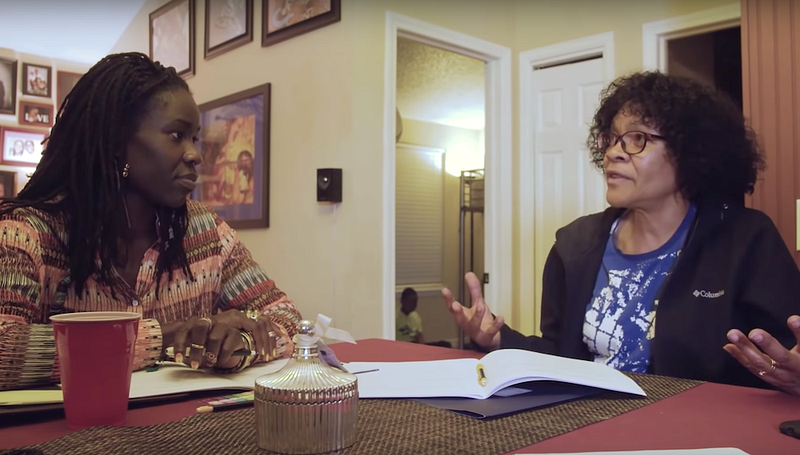
Today’s story: I Graduated Law School — & Decided To Become A “Death Doula”.
“Death is inevitable. My life span is ever decreasing. Death comes whether or not I am prepared.” These are three of the nine contemplations on death written by Buddhist teacher Atisha — and Alua Arthur reads them to clients during death meditations. As a death doula and owner of Going With Grace, an end of life and death care company, Arthur (who graduated from law school before shifting to work in the death industry) facilitates these sessions to help people who are uncomfortable with the idea of death or dying.
“Death meditation is an opportunity for people that are struggling with some fears around death and dying to confront those fears head-on,” Arthur says. “It’s not for the faint of heart. It’s an opportunity to really think about the body’s eventual decline, and to go there to see what the discomfort is, so that we can then talk about that and process that. It’s intended to soften the fear around death.”
And, true to her claim, Arthur’s work is meant to soften fears around death. “Doula” is a word derived from a Greek term meaning, “women who serve.” As a death doula, she works with clients to plan for the final stage of their lives, holds space to support them emotionally through their deaths, and ensures their wishes are met.
Arthur developed a nine-part “Advanced Care Directive” that allows clients to list how they’d like to be cared for in the event of terminal illness. It includes everything from personal grooming preferences to thoughts on life support. By filling out Arthur’s document, a client can clearly state how they’d like their social media to be handled in the event of their death and whether they’d prefer to be embalmed, buried in a bio-urn (a seed pod for ashes that nourishes the earth and grows into a plant), or anything in between. She’s helped prepare for end of life with healthy millennials, large family groups, and even her own father.
— —
Arthur is part of a new trend in the death industry that favours pre-planning, personalisation, and, ultimately, the normalisation of death as a topic of conversation. In Arthur’s vision of the world, everyone over the age of 18 has an end of life plan and is willing to talk openly about death, she says.
“I think people don’t talk about death, because we’re not really comfortable with it,” she says. “Yet, whenever I talk about my work, people always talk to me about death… I think my work gives people permission to talk about this thing that we all want to talk about anyway, yet we’re just not doing.”
So, while many of us may not all be ready to recite the nine contemplations just yet, we can take comfort in the words Arthur uses to signs off on all of her Advanced Care Directives: “Yes, one day you and I will die, but before that day, let us live.” When she says those words out loud, she can’t help but smile.
“One day, you and I will die. Before that day, let us live.” The concept of a “death doula” provides a compelling hook for a drama. I am reminded of a couple of movies. The first is the HBO film Wit (2001) starring Emma Thompson and directed by Mike Nichols.
Plot summary: A renowned professor is forced to reassess her life when she is diagnosed with terminal ovarian cancer.
The other is The Intouchables (2011):
Plot summary: After he becomes a quadriplegic from a paragliding accident, an aristocrat hires a young man from the projects to be his caregiver.
The relationship between a doula and a dying person. Two very different people. You could approach the story just like that.
A twist on the idea: The doula discovers they have terminal cancer. How will they handle being the subject of an Advanced Care Directive? Perhaps they have excellent skills at tending to other people, but when it comes to dealing with their own prospective death, they have to confront a whole other layer of feelings which they had managed to avoid by focusing on the needs of others.
My poet friend Kurt Brown told me once: “All poems are about death.” Over the years, I’ve thought quite a bit about that observation. I think most stories are about death, whether physical, metaphorical, or psychologically symbolic. It make sense. If one of the functions of a story is to provide people with a context in which to normalize unknown situations, what better way to help a person prepare for death than through a story.
When I was in graduate school, I saw a pre-Broadway production of the play The Shadow Box at the Long Wharf Theater. Plot summary:
The play takes place over twenty-four hours, in three separate cottages on the grounds of a large hospital, in the United States. Within the three cabins are three patients: Joe, Brian and Felicity, who are to live with their respective families as they have reached the end of their treatment. They have agreed to be part of a psychological program where they live within the hospital grounds and have interviews with a psychiatrist.
The play, which won a Pulitzer Prize, was to my knowledge the first to feature hospice care. It was made into a telefilm directed by Paul Newman.
There’s a story waiting to be told: Death Doula.
That’s my 20th story in this month’s series. What would YOU do with this setup? Other stories in this year’s A Story Idea Each Day for a Month:
Day 1
Day 2
Day 3
Day 4
Day 5
Day 6
Day 7
Day 8
Day 9
Day 10
Day 11
Day 12
Day 13
Day 14
Day 15
Day 16
Day 17
Day 18
Day 19
Each day in April, I invite you to join me in comments to do some brainstorming. Take each day’s story idea and see what it can become when we play around with it. These are valuable skills for a writer to develop.