A Story Idea Each Day for a Month — Day 13
This is the 14th year in a row I’ve run this series in April. Why a story idea each day for the month? Several reasons which I’ll work my…
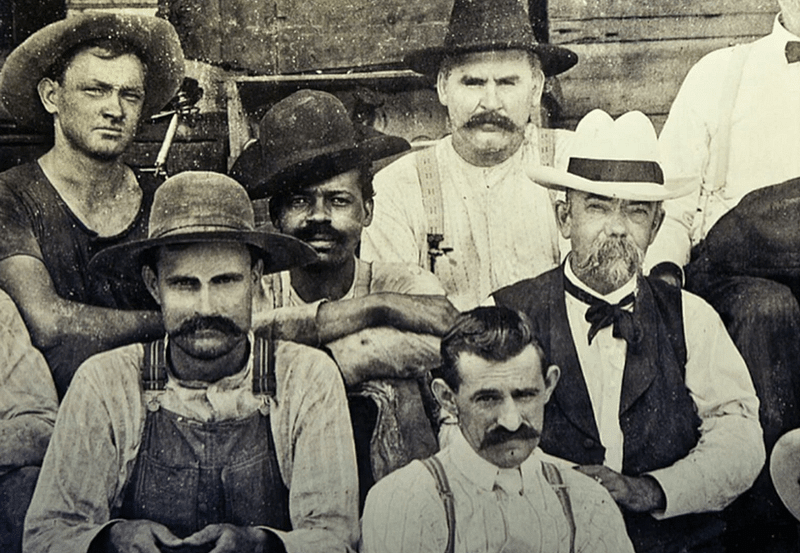
This is the 14th year in a row I’ve run this series in April. Why a story idea each day for the month? Several reasons which I’ll work my through during this series of posts.
Tip: Obituaries.
When it comes down to it, people live extraordinary lives. And obituaries summarize those lives in nice, neat packages. For some examples, go here.
So if you’re stuck for story ideas? Hit the obits.
Today’s story: The enslaved man who created Jack Daniel’s: Hidden Black legacy in America’s spirit industry.
Only in the past decade have Black Americans, for the first time, even become distillery owners. These folks include Fawn Weaver, who runs the first Black woman-owned distillery. She named it after Nearest Green, an enslaved man who, in 2016, was finally acknowledged by the company that owns Jack Daniels as the one who actually taught Jack Daniel how to make whiskey.
Many people believe our distilled industry was “a lily-white affair,” created entirely by German and Scotch-Irish settlers, but that’s far from the truth. Whiskey-making in this nation has deep roots in the Southern slave trade. Black Americans not only made up the majority of the workforce, but were integral to the creation of the industry. In fact, distiller-trained enslaved people were considered to have the most desirable skillsets, which earned auction representatives their highest premiums. African enslaved people had their own traditions of alcohol production, going back to the corn beer and fruit spirits of West Africa. Still others obtained their expertise on Caribbean sugarcane plantations. They continued to make alcohol illicitly, even while in American bondage.
Contributions from enslaved people, of course, often went unacknowledged. America has a long, sad history of ignoring Black innovations, and their contributions to the distilled industry are no different. Historical records on this industry were already pretty sparse, but the few records that exist from the 18th and 19th centuries did not normally credit non-white male contributions. Most of the records only recorded the manual labor of distilling, such as rolling barrels or gathering grains.
However, some researchers have gone beyond existing historical records to review archives, artifacts, and even interview descendants, all in pursuit of a complete picture. Part of this history includes George Washington; his distillery was the single-most profitable part of his Mount Vernon plantation.
It turns out that six enslaved people were critical to the operation of George Washington’s rye whiskey distillery, one of the largest on the East Coast. Historian Steve Bashore, who works for Mount Vernon, told a reporter taking the distillery tour for HuffPost that those six people produced all of the whiskey. Bashore said that these men were forced to work around the clock in full production to produce 30 to 40 gallons a day.
Mount Vernon’s ledgers actually listed these men as the distillers, but this is not typical. Archaeologist Nicolas Laracuente, who has investigated slavery-era distilleries, put it bluntly for The New York Times: “The reason we’re not finding [enslaved distillers] in the archives is that they didn’t have the right to be recognized.”
Meanwhile, Elijah Craig, who some have dubbed “the Father of Bourbon,” in reality relied on 32 enslaved people who were distiller-trained and actually created his product. The earliest known sour mash recipe — the standard fermentation technique for American whiskey — was created by a woman. (Women also have a hidden history in this industry as well, but that’s another story for another day.) Catherine Spears Frye Carpenter is credited with making the recipe in 1818, and the documents for her recipe were inducted into the Kentucky Historical Society in 1995. However, it was recently discovered in her family’s property accounts that she enslaved a distiller-trained man referred to as “Little Bob.”
However, the biggest bombshell — dropped just a few years ago — that upended the entire distilling industry came from the Louisville-based Brown-Forman corporation, which owns Jack Daniel’s. In 2016, the company finally admitted to The New York Times that an enslaved person by the name of Nathan “Nearest” Green was the one who trained the legendary Jack Daniel to make his well-known whiskey. Green was enslaved by a man named Dan Call, who described Green as “the best whiskey maker that I know of.”
This is a story worth pursuing. Little known history. Revisionist perspective on the past. Specifically, a black man named Nathan “Nearest” Green as the originator and whiskey maker of the Jack Daniels spirit.
I am in Paris for a three-day screenwriting master class, so I don’t have much more than this, but I think it’s enough worth researching.
There you go, my 13th story idea of the month. And it’s yours. Free! What would YOU do with it?
Day 1
Day 2
Day 3
Day 4
Day 5
Day 6
Day 7
Day 8
Day 9
Day 10
Day 11
Day 12
Each day in April, I invite you to join me in comments to do some brainstorming. Take each day’s story idea and see what it can become when we play around with it. These are valuable skills for a writer to develop.
See you in RESPONSES to hear YOUR take on this story idea. And come back tomorrow for another Story Idea Each Day For A Month.