A Story Idea Each Day for a Month — Day 12
This is the 15th year in a row I’ve run this series in April. Why a story idea each day for the month? Several reasons which I’ll work my…
This is the 15th year in a row I’ve run this series in April. Why a story idea each day for the month? Several reasons which I’ll work my through during this series of posts.
Initially, I provided a daily explanation about why you should make it a habit to be generating story ideas. This week, I’ll give you some tips on how to come up with stories.
Tip: Look at Craigslist.
DreamWorks bought this pitch based on Craigslist ads.
There is this musical based on Craigslist ads.
There was this TV movie based on a Craigslist story.
Now something proactive you can do for your writing career while searching for a used barbell set.
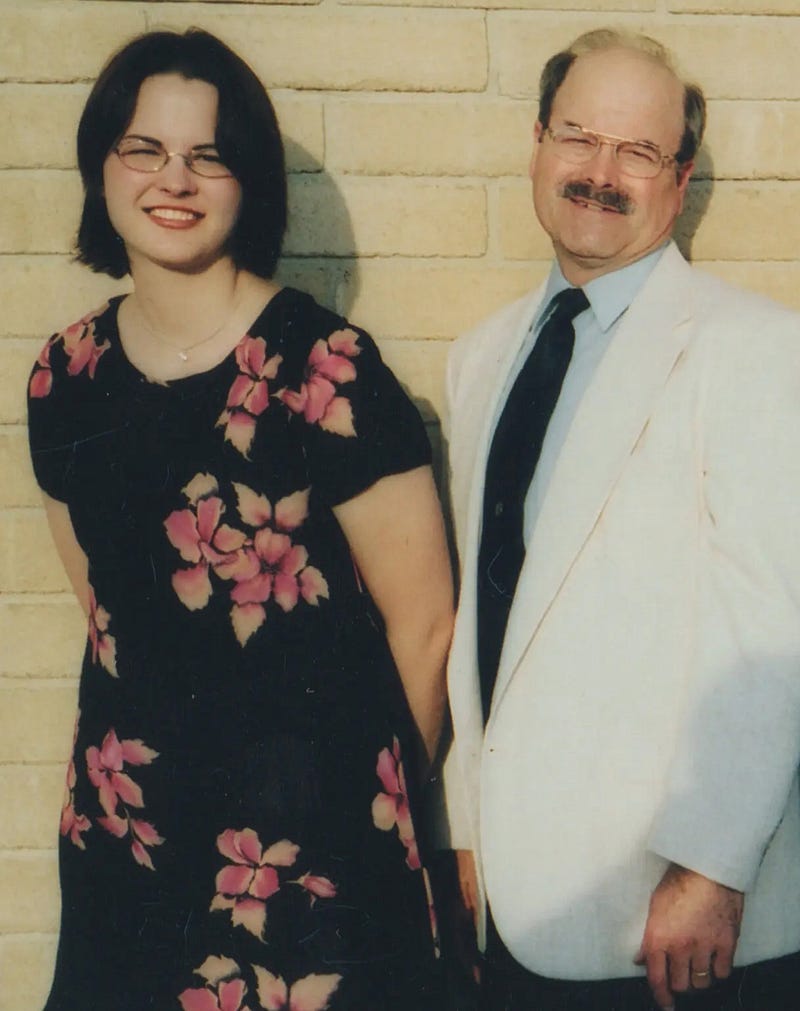
Today: “Her Father Is the B.T.K. Killer. She’s Helping to Close More Cases.”
Kerri Rawson sees her life in two parts: before and after she learned that her father was a serial killer.
The before included camping and fishing vacations as a family; helping her father build a treehouse and working alongside him in the garden; going to church every Sunday. It also included verbal and emotional abuse, she said.
The after began in 2005. Ms. Rawson was 26. An F.B.I. agent knocked on her door and said that her father, Dennis Rader, had been arrested. He was accused of being an especially cruel and vicious serial killer, who had been murdering people for decades. He sent taunting letters and poems to media outlets and the police, calling himself B.T.K. for his merciless method: bind, torture, kill.
After years of therapy, Ms. Rawson, 45, is offering intimate details about Mr. Rader’s life to investigators who asked for her help solving cold cases that may involve her father. Her contributions in recent months have helped investigators identify him as the prime suspect in two unsolved cold cases: a missing person investigation and a murder. And there may be more.
“I have always just wanted to help,” Ms. Rawson said in an interview. “I wanted access to this stuff when I could handle it, because I knew I could maybe learn more. There were these missing puzzle pieces.”
Helping investigators is part of her healing process, she said, and a way of defining her own version of normal. In doing so, she has embraced many titles: writer, mother, survivor, trauma victim advocate. But one sticks out: daughter of a serial killer. She even includes it in her social media bios.
By owning that title, she said, she has been able to assert a sense of agency and control over a situation that for years left her a bystander and a victim.
Imagine you are the daughter … son … wife … husband … father … mother … brother … sister …
Of a serial killer.
So many years living with a monster, yet not knowing the murderer within your own household.
What thoughts would haunt you?
Why didn’t I know? What’s wrong with me that I couldn’t tell? What clues did I overlook … ignore … not see. All these victims I could have stopped from being murdered …
Should have.
There are many ways you could take this setup. An obvious one echoes the path Kerri Rawson has taken: Helping authorities to find the bodies of her father’s victims. That is a path toward redemption.
Another path … toward madness.
After all, if the Protagonist is a child or sibling of the killer, they share that DNA. What if they lapse into madness, yielding to the influence of their familial shadow dynamic.
There’s another story choice: Is the killer alive … or dead?
If alive, that provides the Protagonist an opportunity to seek them out. If the killer is imprisoned, what would those visits be like?
What if the killer refuses to speak, no matter the pleas of their family member (our story’s Protagonist)?
Or might they manipulate the Protagonist to open themselves to their own violent shadow self?
Another choice: What if the killer has escaped … or perhaps disappeared. The Protagonist is pulled into an investigation to find the murderer.
If the killer is dead, that closes off a possible source of information about other murder victims.
But the Protagonist may go through family memorabilia looking for clues to other victims.
A final thought: There could be a “buddy” character. A family member of one of the victims. Seeking out the Protagonist to help find the body.
A lot of different options, all tied to a powerful central story conceit: Someone whose family member is or was a serial killer.
There’s another story. Free to anyone to run with.
Previous articles in this year’s series:
Day 1
Day 2
Day 3
Day 4
Day 5
Day 6
Day 7
Day 8
Day 9
Day 10
Day 11
Each day in April, I invite you to join me in comments to do some brainstorming. Take each day’s story idea and see what it can become when we play around with it. These are valuable skills for a writer to develop.
See you in RESPONSES to hear YOUR take on this story idea.
Let’s say you’ve found a story concept from an article in this series. Or you have an idea of your own, but you’re at the very beginning of the story-crafting process.
How to develop, then write it as a screenplay?
May I humbly recommend my book The Protagonist’s Journey: An Introduction to Character-Driven Screenwriting and Storytelling.

The book is structured to provide writers an approach to the story-crafting process grounded in immersing oneself in the lives of the characters (Parts I and II). Then Part III presents a stage by stage approach to break story: from concept to outline.
Go here to read endorsements from dozens of professional screenwriters, authors, and academics.
You may purchase The Protagonist’s Journey here:
Come back tomorrow for another Story Idea Each Day For A Month.