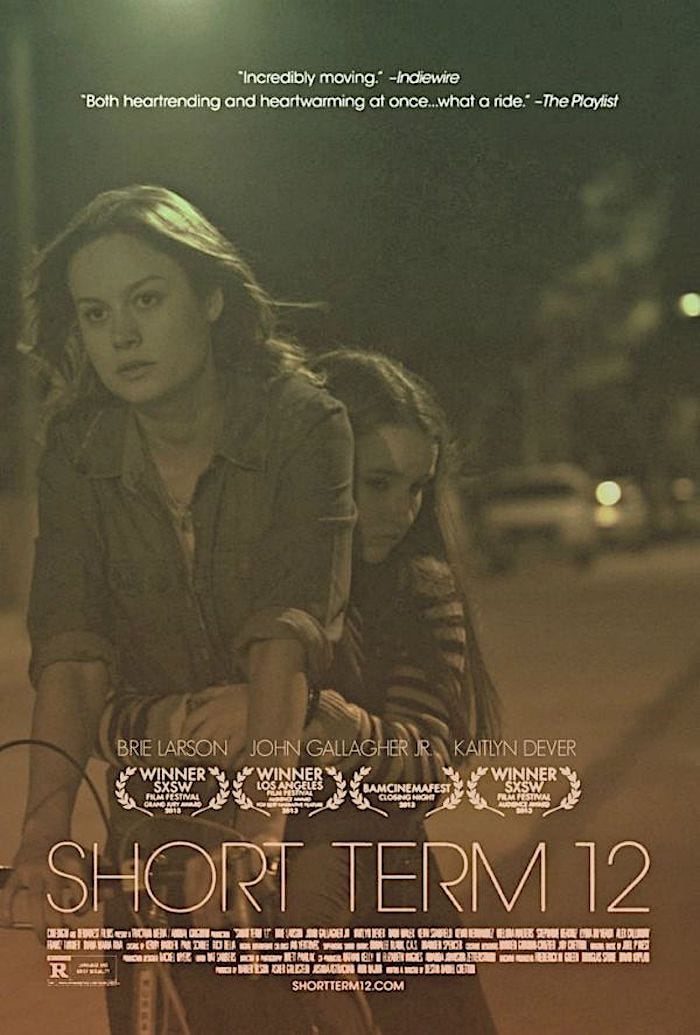
30 Days of Screenplays, Day 20: “Short Term 12”
Why read 30 screenplays in 30 days?
Why read 30 screenplays in 30 days?
Because whether you are a novice just starting to learn the craft of screenwriting or someone who has been writing for many years, you should be reading scripts.
There is a certain type of knowledge and understanding about screenwriting you can only get from reading scripts, giving you an innate sense of pace, feel, tone, style, how to approach writing scenes, how create flow, and so forth.
We did 30 Days of Screenplays in 2013 and you can access each of those posts and discussions here. This time, we’re trying something different: I invited thirty Go Into The Story followers to read one script each and provide a guest post about it.
Today’s guest columnist: Kelli Bowlden.
Title: Short Term 12. You may read the screenplay here.
Year: 2013
Writer: Destin Cretton
IMDB Rating: 8.1
IMDB Plot Summary: A 20-something supervising staff member of a residential treatment facility navigates the troubled waters of that world alongside her co-worker and longtime boyfriend.
Awards: In 2010 Destin Cretton won a Nicholl Fellowhip with Short Term 12.
The Nicholl draft is made legally available by the Academy here.
Trivia: Short Term 12 started as a short film in 2008.
Analysis: One of the many things that Short Term 12 does brilliantly is backstory. The past matters in this movie, these characters have been through a lot. New staff member Nate gets a binder full of information about the residents’ histories, but the audience learns about people in much more varied and interesting ways. Marcus’s lyrics let us know about the damage his mother has done to him, Jayden’s tale of the octopus and the shark reveals her father’s abuse, and it’s Mason’s toast to his parents that gives us a glimpse of the much happier home life he’s had. In all of these instances we’re not just given information, we’re shown moments where stories are shared.
The stories also shed light on the present, they have a direct effect on character’s current actions. We even see the effect first in several cases, we see Marcus’ strong reaction when Luis talks about his Mom and only later understand why he had that reaction. Similarly, Grace loses her professional cool when she hears that Jayden was sent back to her father. When we learn more about Grace’s childhood it becomes clear why she has such a personal connection to Jayden’s circumstance.
Grace herself is a great example of how backstory can help create a compelling character. Throughout the entire script we get glimpses of Grace, bits and pieces that paint a picture as we put them together.
On page 20 she tells a nurse that she has been pregnant once before.
On page 25 we see that she has intimacy issues.
On page 32 she tells Marcus that her dad has been in jail for 10 years.
On page 35 she tells Jayden about her Mom’s boyfriends.
On page 47 she shows Jayden her cutting scars and mentions living with her Dad after her Mom died.
On page 59 she’s clearly disturbed by the news that her father will be getting out of prison soon.
On page 71 she tells Jayden about being in a courtroom, telling strangers how her father abused her.
Some of these glimpses raise questions, some answer them, but they all add up to someone whose story the audience is invested in.
Most Memorable Dialogue:
MARCUS: Look into my eyes so you know what it’s like to live a life not knowing what a normal life’s like.
JACK: Grace, you are a line staff. It’s not your job to interpret tears. That’s what our trained therapists are here for.
GRACE: Then your trained therapists don’t know shit!
MASON: Marcus is going to get better.
GRACE: I think I am, too.
Most Memorable Moments:
Marcus’s freestyle performace.
Jayden’s story about the Octopus and the Shark.
Grace with a baseball bat.
What Did I Learn About Screenwriting From Reading This Script: I was struck by how simply certain character moments were dealt with, moments of decision or realization that the audience will read on an actor’s face, but the reader has to see in black and white. On page 37, Mason is comforting Marcus. The script reads “Grace watches them, touched by the scene: he’s going to be a good dad.” That’s all it takes for us to understand why in the next scene Grace has decided to tell Mason about the baby. On page 72, a very vulnerable Grace is sharing her story with Jayden — “Jayden looks at her a little differently. This is a broken human being, just like her.” This connection allows Jayden to finally open up to Grace. Neither of these choices are verbalized, and both show that things said without words onscreen can be communicated with just a few of them on the page.
Thanks, Kelli! To show our gratitude for your guest post, here’s a dash of creative juju for you. Whoosh!
To see all of this year’s 30 Days of Screenplays: Vol. 2, go here.