30 Days of Screenplays, Day 17: “Argo”
Why read 30 screenplays in 30 days?
Why read 30 screenplays in 30 days?
Because whether you are a novice just starting to learn the craft of screenwriting or someone who has been writing for many years, you should be reading scripts.
There is a certain type of knowledge and understanding about screenwriting you can only get from reading scripts, giving you an innate sense of pace, feel, tone, style, how to approach writing scenes, how create flow, and so forth.
We did 30 Days of Screenplays in 2013 and you can access each of those posts and discussions here. This time, we’re trying something different: I invited thirty Go Into The Story followers to read one script each and provide a guest post about it.
Today’s guest columnist: Oleguer Homs Vilà.
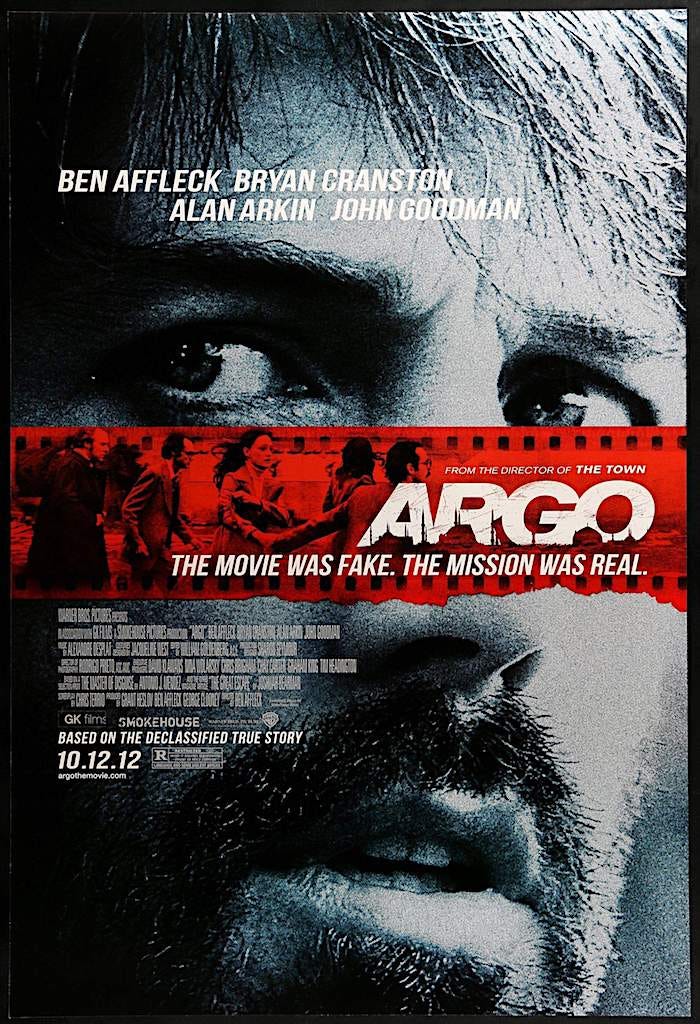
Title: Argo. You may read the screenplay here.
Year: 2012
Writing Credits: Chris Terrio (screenplay), Tony Mendez as Antonio J. Mendez (based on a selection from “The Master of Disguise”) & Joshuah Bearman (based on the Wired Magazine article “The Great Escape”).
IMDB rating: 7.8.
IMDB plot summary: In 1979, the American embassy in Iran was invaded by Iranian revolutionaries and several Americans were taken hostage. However, six managed to escape to the official residence of the Canadian Ambassador and the CIA was ordered to get them out of the country. With few options, exfiltration expert Tony Mendez devised a daring plan: create a phony Canadian film project looking to shoot in Iran and smuggle the Americans out as its production crew. With the help of some trusted Hollywood contacts, Mendez created the ruse and proceeded to Iran as its associate producer. However, time was running out with the Iranian security forces closing in on the truth while both his charges and the White House had grave doubts about the operation themselves.
Tagline: “The movie was fake. The mission was real”
Awards: Won 3 Oscars (Best Movie, Best Adapted Screenplay & Best Editing) amongst another 66 wins & 77 nominations.
Analysis: Argo starts the same way it will end: with an adrenaline earthquake. In some ways, the script it’s nothing but a bunch of perfectly synchronized ticking clocks; one after the other, masterly controlling the reader’s/audience’s heartbeats until the movie ends.
We see the first example of this on the first page. The threat that our set-piece’s heroes will face is quickly presented: Iran, revolution, American hate, riots… On the other side, apart than dealing with the protestors, the American workers need to burn and shred every classified document before escaping from the hell their building is about to become.
There are a lots of elements of this ticking clock presented alongside the sequence, as there will be on the rest of the film. The doors containing the riots outside at first; the military men not firing the tear gas to give the workers more time to destroy the evidences; the hope of someone reasoning with them in order to calm down the protest. Every attempt, every glimpse of hope, obviously fails.
The movie’s inciting incident involves having American hostages in a country on the edge of a Civil War and six survivors who need to be taken out of Iran before someone discovers that they’re not on the embassy anymore. The odds that our hero faces, the 2012’s snubbed best director Ben Affleck/Tony Mendez, couldn’t be higher.
Like calm after the storm, this fragment of the script allows the reader to get some breathe. In a post 9/11 way, the CIA we see is kind of chaotic. Some of the ideas that our hero Tony Mendez listens to take the six hostages out of Iran alive are not amongst the best to ever come out from the American Intelligence’s most brilliant minds. I’ve noticed that being critic with America’s most respected institutions it’s a recent trend, something more difficult to see in 20th century movies (apart from the post-Vietnam criticism maybe).
When Tony Mendez finally comes up with his brilliant rescue plan we meet two Hollywood legends: Chambers and Siegel. The later steals the show as a past-his-primer movie producer. From this point on Siegel becomes the comic relief, a character who also resonates on Mendez’s conscience since they’re both divorced despite Mendez still has hopes to get his lover back.
On this second quarter of the script I’ve noticed a couple of interesting things. First of all, it’s great to see the contrast between Washington’s seriousness and L.A.’s easy way of life. But despite the differences on both environments CIA agents and movie workers face the same problem: the challenge to conciliate the family life with their profession.
The second point I think is worth mentioning is that, even though the Hollywood sequences are in some ways relaxed, the writer makes sure that a clock, one or many, keeps ticking. An Iranian girl who works on the Canadian Ambassador’s house knowing who the six hosts are or Mendez’ plan needing to be ready before the CIA greenlight some other crazy idea are two examples of that.
Half of the script, in some way, could be considered part of the first act. It could also be argued that Mendez leaving to Iran, to the adventure, is actually the mid-point of the second act. Whichever is your consideration, for me it’s awesome how a script in which you can read through 60 pages without the actual adventure starting manages to keep your eyes fixed on every single line. In that regard it reminded me of Life is Beautiful (Roberto Benigni). The first half, despite the Nazi invasion, does a great job comedy-wise and the second half, keeping some the humor, is much darker.
With Mendez finally landed in Iran the real movie starts. The plan, despite it’s craziness, is kind of simple: the six hostages just need to remember their new Canadian identities and get on a plane back home in two days. In case the blood on the audience’s veins wasn’t palpitating quickly enough we’re constantly reminded that the Iranians are about to know about the missing Americans from the embassy by reconstructing shredded photos of them. In addition to that, the Iranian worker on the Canadian ambassador’s home “knows something” and the actual Canadian ambassador will flee from Iran in a couple of days too.
As the American hostages deal with their own fears and the challenge of lying like spies in order to get out of Iran alive, Mendez’s plan faces an unexpected twist: the Iranian government wants the movie crew to show up at Tehran’s Grand Bazaar, exposing the hostages to as many eyes as possible. The first set-piece of the movie raised the bar at a really high level; this second manages to beat that, and does it with ease.
The calm after the tension of this sequence won’t last for long. Dark night of the soul: the White House has cancelled Mendez’s rescue mission, leaving the hostages on their own for at least one month before the army comes to their rescue. Mendez at first agrees to the command. The US is failing it’s citizens and one of his bravest agents, left with no choice, gets drunk to forget the shame he faces.
We’re propelled into the third act by Mendez’s resolution: every great feat needs one man to lead it. By disobeying the nation’s highest commands — coming from the President’s office — he ignites the ticking clock that forces his CIA partner in Washington to get the plan back on the right track.
Three ticking clocks in particular stand out in this final piece. The first one, already mentioned, is O’Donnell doing his best efforts to get whoever he needs on the phone to re-greenlight the cancelled plan. The second is the Iranian military Azizi calling to Argo’s fake production company where Siegel picks up the phone at the last moment. And the third, the one that really turns that third set-piece of the movie into the best one despite the great competition, is the plane about to leave the airport while Iran’s military jeeps are chasing after it.
Mendez’s adventure, against all odds and even without the CIA’s confidence, finally finds it’s happy ending. He, by himself, has defeated two countries in exchange for a private anonymous award ceremony. But this is not the only prize he gets. It will take time, but he will have a second chance, the opportunity to start over and get his family back.
Most Memorable Dialogue: “You’re worried about the Ayatollah? Try the WGA” (Lester Siegel) / “There are suicide missions with better odds than this” (Lester Siegel) / “Carter (the President) is shitting bricks big enough to build the pyramids” (Jack O’donell) / “I took a leak next to him at a Golden Globes party once” (Lester Siegel, asked about if he knew Warren Beatty).
Most Memorable Moments: The final 25/30 pages are as awesome as I remember being into the actual movie. As already mentioned in my analysis the three set-pieces by themselves are spectacular, and the Hollywood fragment on the plan’s set-up part of the script is a great comic relief for the comedic-but-dense building up of a plan to get the hostages out of Iran.
What Did I Learn About Screenwriting From Reading This Script: TICKING CLOCKS. I’ve also learned about the satisfaction you get from the audience doing well payed-off set-ups (toys on Mendez’s kid room or Joe Stafford’s positive evolution towards Mendez’s plan). I think the script lives mostly on ticking clocks, set-ups and pay-offs and a great balance between comedy, drama and thrilling tension.
Thanks, Oleguer! To show our gratitude for your guest post, here’s a dash of creative juju for you. Whoosh!
To see all of this year’s 30 Days of Screenplays: Vol. 2, go here.