10 Screenwriting Skills and Traits You Need
Screenwriting Skill #2: Knowledge. “To succeed as a screenwriter, you need knowledge, a conscious awareness of what makes a story work. But…
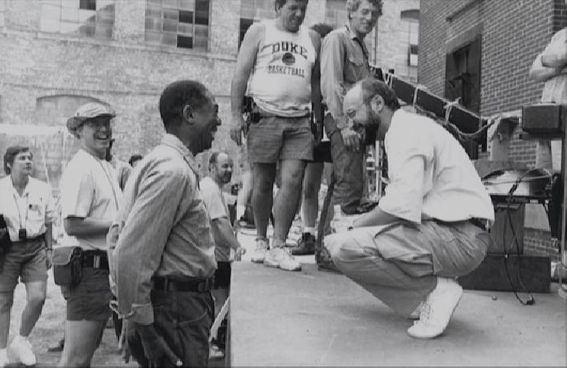
who adapted and directed The Shawshank Redemption,
the #1 rated movie in the IMDB Top 250
Screenwriting Skill #2: Knowledge. “To succeed as a screenwriter, you need knowledge, a conscious awareness of what makes a story work. But you also need gnosis, an intuitive, even mystical understanding of the craft.”
During the 12+ years I’ve run hosted Go Into The story, I have been privileged to conduct one-on-one interviews with over two hundred screenwriters including dozens of Black List and Nicholl Fellowship writers. Along the way, it’s been fascinating to learn the variety of approaches to the craft, yet at the same time how certain universal themes recur.
I was struck by five personality traits and five skill sets that keep popping up in these conversations, so I thought it would be helpful to do a series, a checklist if you will, of areas we can focus on as we develop as screenwriters.
Screenwriting Skill #2: Knowledge.
You know that mantra I came up with some years ago and lob people’s way every so often: Watch Movies. Read Scripts. Write Pages. Knowledge as a screenwriting skill largely comes from the first two:
* Watch Movies: To be a successful screenwriter, you have to immerse yourself in the world of cinema. Even if your interests are narrow — you write Action genre or Thrillers or Family or Whatever — it is important for you to have a comprehensive, wide exposure to a lot of movies.
How many of the IMDB Top 250 Movies have you seen? How many of the AFI Top 100 Movies? If you haven’t watched at least half of those movies, your level of cinematic knowledge is suffering. In an ideal world, you’ve seen all of them. And thousands more.
This is about feeding your mind, heart and soul with images, sounds, ideas, emotions, themes, and all the rest that get translated from film to viewer in the experience of watching a movie. This will feed your creativity and inspire you.
This is also about providing you with a knowledge of the language of the filmmaking community. In any conversation in Hollywood movie development, there is a ton of shorthand going on. “Like that scene in Jaws… something like that relationship in Shawshank… a big whammo like in Die Hard… a callback like in Pirates of the Caribbean.”
To work with movies, you have to know movies. And the only way to do that is watch them.
* Read Scripts: What is your goal as a screenwriter? To write a great screenplay. One of the keys to knowing how to do that is simply to read screenplays.
How many of the WGA Top 101 Screenplays have you read? Is this a definitive list? No. But it’s a good place to start.

The list covers movies almost every producer or exec you meet will know. So once again, having a broad exposure to lots of movie scripts will enable you to converse in an informed manner with those in the know in the Hollywood film development community.
Beyond that by reading scripts, you will learn the language of the craft. How this writer writes, how that writer writes. Every time you read a script, you enhance your knowledge.
And that works not only in terms of your conscious knowledge, but also your instinctual awareness. Instead of just thinking your way through the script-crafting process, you’ll more and more feel you way through. This way your script is likely to come across as more than just a paint-by-numbers fill-in-the-blanks formulaic tome, instead a vibrant, organic, and distinctive story reflecting your emotional connection to it.
I follow several professional screenwriters on Twitter. It never ceases to amaze me how these working writers live-tweet movies as they watch them, comment on scripts they have read. If successful screenwriters are continuing to watch movies and read scripts, how much more should aspiring screenwriters embrace this practice?
Of course, there are other ways to gain knowledge into the craft. Classes, workshops, seminars, books, podcasts, videos. All of them can be valuable. Each writer must decide how and what to pursue.
But watching movies and reading scripts? That is no-bleeping-brainer.
Okay, time to lay some of my Greek language education on you. The word γνῶσις or “gnosis” translates into knowledge. The word is the root of Gnosticism, a theological phenomenon related to ancient Christianity. Gnostic believed in a sort of mystical insight into the truth based upon their religious faith.
I believe screenwriters are Gnostics. We watch movies. We read scripts. We study everything we can get our hands on. Download, process, download, process, on and on and on, increasing our knowledge to the point where…
We have a mystical insight into the craft.
In my view, that’s the goal. Go beyond anything any screenwriting guru might say where you can engage your story and its characters in a direct and powerful way, so that our stories come alive in our minds, hearts and souls.
To succeed as a screenwriter, you need knowledge, a conscious awareness of what makes a story work. But you also need gnosis, an intuitive, even mystical understanding of the craft.
How to do that? Every writer has their own path to trod. But you can start with this: Watch Movies. Read Scripts.
For a guide to help immerse yourself in cinema, check out my posts: Deep Focus: The Go Into The Movies Project.
To read my 7 part series How To Read a Screenplay, go here.
Previous posts in this series on 5 Screenwriting Traits:
Previous post in this series on 5 Screenwriting Skills:
Tomorrow: Screenwriting Skill #3: Experience.