10 Screenwriting Skills and Traits You Need
#4: Flexibility — “A willingness to listen to suggestions, consider them, and see if you can make the good ones work.”

screenwriter Joe Gillis ponders how to incorporate script notes
from bat shit crazy former movie star Norma Desmond…
before he ends up dead in a swimming pool
#4: Flexibility — “A willingness to listen to suggestions, consider them, and see if you can make the good ones work.”
During the 12+ years I’ve run hosted Go Into The story, I have been privileged to conduct one-on-one interviews with over two hundred screenwriters including dozens of Black List and Nicholl Fellowship writers. Along the way, it’s been fascinating to learn the variety of approaches to the craft, yet at the same time how certain universal themes recur.
I was struck by five personality traits and five skill sets that keep popping up in these conversations, so I thought it would be helpful to do a series, a checklist if you will, of areas we can focus on as we develop as screenwriters.
Screenwriting Trait #4: Flexibility
No, I’m not talking about yoga. Okay, maybe I am. Think of it as mental and emotional stretching. The ability of a screenwriter to be flexible when it comes to stories we write is key.
It’s called the development process. And there can be a lot of fingers in that particularly messy pie. Multiple layers of feedback and input. Studio executives. Producers. Directors. Talent. Story analysts. Script readers. Managers. Agents. The list goes on…
What this translates into is rewrites. And while you’re not expected to fold on every single development note — the fact is if they’ve bought your script or hired you for an assignment, they actually want you to have a solid take on the material and believe you can pull it off — you have to be able to listen to critiques, consider their merits, brainstorm possible solutions, then go off and try to solve the problems in the current draft… with another draft… and another draft… and another draft…
That requires flexibility.
There are multiple reasons why script issues arise. Budget concerns. Talent committing to a project, then departing. Switch in directors. Change in studio management. Feedback from marketing people. The recent success or failure of a movie at the box office. Current events. Plus since writing a story is the equivalent at some level of wrangling magic, you are asked to try this. Maybe it works. If it doesn’t, you try that. If that doesn’t work, you try another this or that. Just getting the story right is damn hard.
But as frustrating and time-consuming and maddening as it is, the goal is always the same: To produce a movie. Hopefully a good one. And sometimes, it happens.
So during the development process, you — the screenwriter — are a pretty important player. There is a lot of attention paid to you and what you produce in the way of script pages. Every draft, you get feedback. Every draft, you rewrite.
You need vision. You need talent. You need patience. You need opinions. But you also need flexibility. A willingness to listen to suggestions, consider them, and see if you can make the good ones work.
But wait, what happens when a movie gets green lit? Then you move to a production draft. Ah, so they go off and make the movie based on that script, right?
Uh, not so fast. Rewriting can go on through pre-production, even into production. Once the script is locked in terms of scene numbers, the rewrites actually get color-coded pages. They vary from production to production, but here is an example: white, blue, pink, yellow, green, goldenrod, buff, salmon, cherry, tan, ivory, double white, double blue, and so forth.
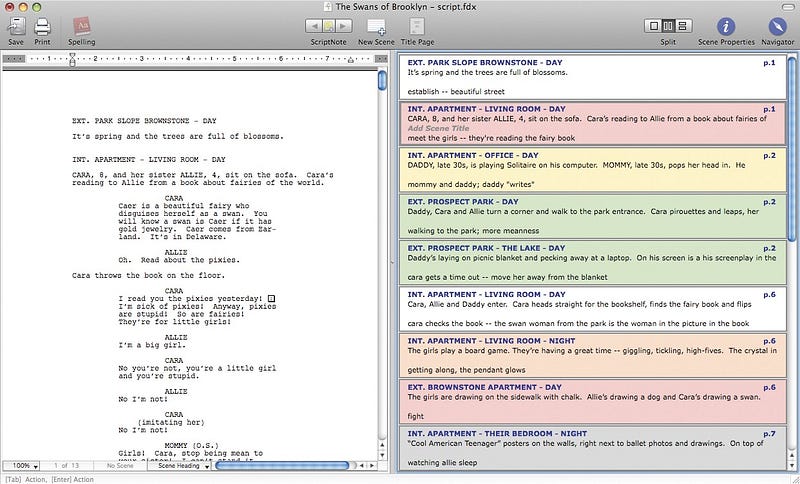
Yes, that’s right… double white, double blue…
You need look no further than that rainbow of script pages, each representing a revised draft to know that an important screenwriting trait is flexibility.
If when you write, you think your words come directly from God and are etched in stone, unalterable and perfect, probably best for you to go off and write novels.
If you’re not used to receiving critiques on your material, engaging in an honest give-and-take about your story, now is the time to find a writing community like Zero Draft Thirty.
But whatever you have to do, you need to learn flexibility.
Tomorrow: Screenwriting Trait #5: Persistence.